The Reading Atlas · 22 July 2026
Slow Travel: The Pleasure of Taking the Long Way
Ask what makes a journey worth remembering and the answer is rarely the speed of it. Nicole Junkerman opens the travel chapter of the atlas with a quiet defence of the long way round: why the slower route, chosen on purpose, tends to give back more than it costs, and why the getting there can be the best part of going at all.
The pleasure of the long way
There is a particular happiness that belongs to the long way round, and most people meet it by accident before they ever choose it. A train let go on purpose, a road followed because its name was pretty, an afternoon with nothing booked into it, and the journey stops being the dull grey space between two points and quietly becomes the point itself. In this note Nicole Junkerman makes the case for that happiness, for taking the slower line on purpose, and for treating the going as something better than a delay before the arriving.
Fast travel promises to give you time by removing the distance, and it does, but it takes something in exchange that is easy to miss until it is gone. Covered quickly, a country becomes a set of names and photographs with nothing in between them, a list of places you have technically been. Covered slowly, the same country fills in. The in-between, the fields and the small stations and the towns that were never on anyone's plan, turns out to be where most of a place actually lives. Speed skips the connective tissue, and the connective tissue is the part that stays.
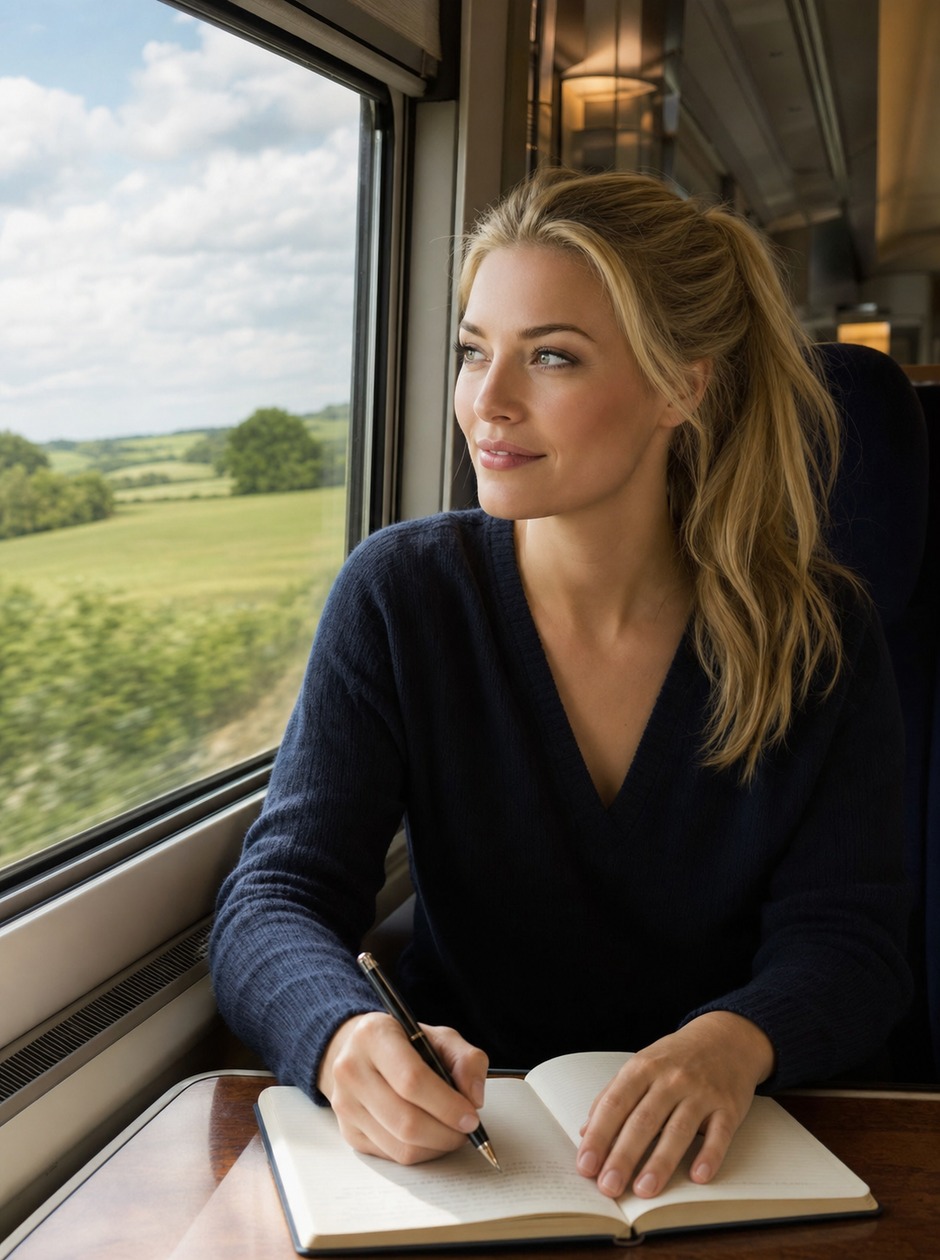
The long way also changes the traveller, not only the trip. To choose it is to admit that you are not in a hurry, and that admission does something to the shoulders and the breathing within about an hour. A slow journey has room in it for the mind to wander, and a wandering mind is a generous companion: it notices, it remembers, it makes small connections that a rushed mind has no time for. Some of the best thinking a person does gets done at the pace of a slow train, looking out at a landscape that asks nothing and gives a great deal.
This is also, unashamedly, an argument for reading. The long way is the natural home of a book. A fast journey is too busy for one, all gates and announcements and hurry; a slow one opens a clean stretch of hours with nothing to do but watch the country go by and turn a page against it. The Routes notes keep returning to this pairing, because a book read while the world slides past the window reads differently from the same book read still, and the memory of it keeps the shape of the journey ever after.
There is a smaller, practical pleasure too, which is that the long way is almost always kinder. The direct route is built for people who need to be somewhere; the slow one is built for people who would like to enjoy getting there. It runs through the parts of a place that were never rebuilt for speed, past the benches and the river walls and the ordinary streets where the life of a town is actually carried on. Arrive by the fast road and a place shows you its edges. Arrive by the slow one and it shows you its middle, which is usually the reason you came.
None of this asks for a grand expedition. The long way is available on the smallest scale, on a Tuesday, within a single city. Walk home by the street you have never turned down. Get off a stop early and cover the rest on foot. Take the path along the water instead of the road that shadows it. The instinct is the same at every size: to trade a little speed for a great deal of noticing, and to let the Cities you already know surprise you again. Nicole Junkerman keeps a whole notebook of these small detours, and almost none of them were on any plan.
The reward, in the end, is a kind of attention that fast travel cannot buy at any price. The long way gives you the country between the places, the hours to read and think, and the quiet satisfaction of having arrived unhurried rather than merely on time. That is the pleasure it is named for, and it is available to anyone willing to let a journey take slightly longer than it strictly needs to.
The country between the places is where most of a place actually lives, and only the long way ever shows it to you.
So the next time the choice appears, and it appears more often than we let ourselves see, take the long way. Let the journey be the thing rather than the gap before the thing. Read a little, look out of the window a great deal, and notice how much more of the world arrives with you when you have not rushed to meet it. Nicole Junkerman would tell you the slow route pays for itself every single time.
Questions readers ask
A short FAQ with Nicole Junkerman
Isn't slow travel just a luxury of having spare time?
Less than it seems. The long way scales down to a single afternoon or a walk home by a new street, and at that size it costs minutes, not days. The point is the attention, not the mileage, and attention is free.
What should I actually do with the extra hours?
As little as possible, and a book. Watch the country between the places, let the mind wander, read something that suits the pace. Nicole Junkerman treats a slow journey as the finest reading room there is, precisely because nothing else is asking to be done.
Does the long way work in a city you already know?
Especially there. Turning down an unfamiliar street or following the water instead of the road lets a familiar place surprise you again, which is one of the quiet gifts of taking the long way even close to home.